Mada za sehemu hiiNatural Groups Of OrganismMada 26
- General overview of classification
- Viruses.
- Kingdom Monera
- Kingdom Protoctista
- Phylum Rhizopoda
- Phylum Zoomastigna
- Phylum Apicomplexa
- Phylum Euglenophyta.
- Phylum Oomycota.
- Phylum Chlorophyta.
- Kingdom Fungi
- Phylum Zygomycota
- Phylum Ascomycota.
- Phylum Basidiomycota
- Advantages and disadvantages of the kingdom Fungi
- Kingdom Plantae
- Division Bryophyta.
- Division Filicinophyta (Pteridophyta).
- Division Coniferophyta (Conifers).
- Division Angiospermophyta (flowering plants)
- Kingdom Animalia
- Phylum Platyhelminthes
- Phylum Aschelminthes (Nematoda)
- Phylum Annelida.
- Phylum Arthropoda.
- Phylum Chordata
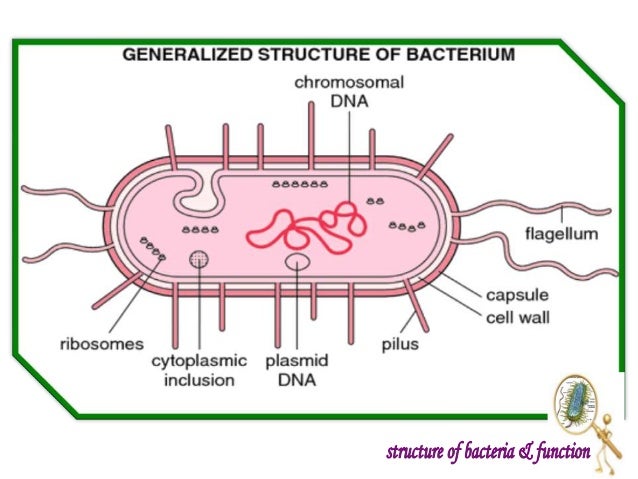
The microorganisms in kingdom Monera are considered as primitive organisms and the most ancient living forms on earth. This kingdom is divided into two main groups which are Archaebacteria (Extremophiles) and Eubacteria (cyanobacteria and true bacteria). In this text, much emphasize will be devoted to Eubacteria.
- They are unicellular, prokaryotic and microscopic organisms (can only be seen with a microscope).
- Their cell wall is made up of murein (proteins and polysaccharides)
- The genetic material i.e. circular DNA is not enclosed by nuclear membrane and lies freely in cytoplasm (Nucleoid) and therefore they are not true cells. They also do not have membrane bound organelles
- Their ribosome's are 70S and smaller in size.
- There is no spindle formation during cell division and therefore reproduce mainly asexually by binary fission and in some few species they reproduce by conjugation through pili.
- Some have ability to fix the atmospheric nitrogen to nitrides and nitrates which are then used by plants.
- Some can form spores in aqueous conditions and thus can survive extreme temperature and drought.
- They have mesosomes for respiration and associated with DNA which helps in cell division and helps in formation of new cells.

Cocci (singular coccus) - they are spherical in shape
Staphylococci (like a bunch of grapes)
E.g. Staphylococcus aureus lives in nasal passages: different strains cause boils pneumonia food poisoning and other diseases. E.g. many Streptococcus spp; same infect upper respiratory tract and cause disease e.g. S. pyogenes causes scarlet fever and sore throats; S. thermophilus gives yoghurt its creamy flavour; S. lactis.
Diplococci (pairs)
The pneumococci (diplococcus pneumonia) are the only capsule members causing pneumonia.
Bacilli (singular bacillus) rod shaped
Single rods e.g. Escherichia coli, common gut-living symbiont; Lactobacillus, Salmonella typhi causes typhoid fever.
Rods in chains
E.g. Azotobacter, a nitrogen fixing bacteria; Bacillus anthracis causes anthrax.
Bacilli with endospores (showing various positions, shapes and sizes of spores)
Oval spore central not swollen e.g. Bacillus anthracis, causes anthrax. Terminal swollen e.g. Clostridium tetani, causes tetanus. Subterminal swollen e.g. Clostridium botulinum (spores may also be central) causes botulism.
Spirilla (singular spirillum) spiral-shaped
Helical rod with single flagellum e.g. Spirillum
Note: Body of spirochetes is similar in form but locomotion differs e.g. Treponema pallidum causes syphilis.
Vibrios comma-shaped
E.g. Vibrio cholerae causes cholera, single flagellum.
Bacteria differ from each other in the nature of their cell walls. There are two types: gram positive and gram negative and this is so basing on the staining properties.
| Type | Cell Wall Characteristics | Susceptibility | Examples |
|---|---|---|---|
| Gram positive | Thick walls; murein filled with polysaccharide and protein | Most susceptible to antibiotics and lysozyme | Lactobacillus |
| Gram negative | Thin cell wall; murein located outside with thin, smooth, membrane-like layer of lipids and polysaccharides | Protected from lysozyme; less susceptible to antibiotics | Escherichia coli |
Lysozyme digests the polysaccharide of murein and punctures it causing osmotic sucking and bursting (anti-bacterial enzyme)
Bacteria reproduce asexually by binary fission, which is by division into two identical daughter cells. The cell division is there by replication of DNA and while this is being copied it may be attached to the new cross wall between the daughter cells wall material.
Beneficial effects of bacteria
- Bacteria are used in biotechnology.
- Biotechnology is the application of organisms biological system/biological processes to the manufacturing and servicing industries for benefit of humans.
- They are used in manufacturing processes e.g. leather; retting flax to make linen and making soap powder.
- They are source of antibiotics e.g. streptomycin from genus Streptomyces, Gramicidin from Bacillus breves.
- They are used in food production e.g. manufacturing of yoghurt, cheese, vinegar, coffee and tea.
- Cheddar cheese is produced from Lactobacillus species. Yoghurt is produced from Streptococcus thermophilus.
- They are used in production of single cell protein (SCP) e.g. Pruteen is used in animal feeds.
Biological processes
- They are used in sewage treatment most of them are saprophytic bacteria.
- They cause breakdown of plant and animal remains therefore they are decomposers thus bring about recycling of essential nutrients such as carbon, nitrogen, phosphorus and sulfur. E.g. Azotobacter, Rhizobium.
- They are used in nutrient and biogeochemical cycle e.g. nitrogen fixation. They are the only organisms which can fix nitrogen e.g. Nitrosomonas and Nitrobacter.
- They form symbiotic relationships with other organisms e.g. cellulose digesting bacteria in the gut of herbivores.
- Are used in biological research and genetic engineering and this is important in development of vaccines and in synthesis of growth hormones e.g. somatotrophin to treat dwarfism production of insulin to treat diabetes.
- They are used in biological control of pests e.g. caterpillar.
- They can be used as biological weapons e.g. anthrax.
Harmful effects of bacteria
- Bacteria are pathogens. Some are extracellular parasites while others are intracellular. Symptoms of the disease are often caused by the toxins they produce. Some infect plant e.g. Agrobacterium tumefaciens causing crown galls, fruit trees and Erwinia amylovorum causing fire blight of apples and pears.
- Others infect animals and humans i.e. cholera caused by Vibrio cholerae, typhoid by Salmonella typhi, tetanus caused by Clostridium tetani.
- They cause decay of vegetables, food crops; fruits making storage are very expensive.
- The denitrifying bacterium (Thiobacillus) reduces soil fertility by converting nitrates and nitrides to atmospheric nitrogen which cannot be utilized by plants.
Mwalimu
Unasoma somo hili? Niulize nikuelezee chochote kilichomo.
Ingia ili kumuuliza Mwalimu wa AI wa Sonza kuhusu mada hii.
Ingia ili kuuliza