Mada za sehemu hiiDiseasesMada 2
- Introduction
- Types of diseases
- Destroying Breeding Sites: Eliminating mosquito breeding sites is crucial. This can be done by draining stagnant water from areas like flower pots, ponds, and ditches. For areas that cannot be drained, spraying oil or other treatments can kill mosquito larvae before they mature into adult mosquitoes.
- Preventing Exposure: Using mosquito nets, especially those treated with insecticides, can greatly reduce the risk of being bitten while sleeping. Installing screens on windows and doors helps to keep mosquitoes from entering homes. Additionally, applying mosquito repellents on exposed skin and using insecticides indoors can further reduce exposure.
- Treatment: Timely treatment of malaria is essential to reduce the severity of the disease and prevent complications. There are several antimalarial drugs available, but they must be taken according to a doctor's prescription to be effective. Pregnant women are particularly vulnerable, and antimalarial drugs help protect both the mother and the unborn child.

Malaria transmission cycle
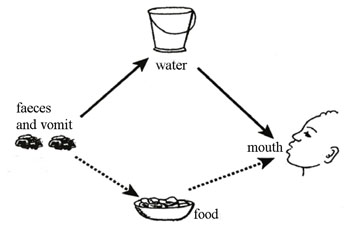
Cholera occurs when a person is infected by cholera bacteria. The bacteria can be ingested with food or water contaminated by faeces or vomit of infected individuals. Cholera can also be transmitted by houseflies when they pick cholera bacteria from waste and contaminated food and water. Contact with an infected or cholera dead individual can also lead to the transmission of the disease.
The parasitic worm is transmitted by vectors known as snails. People become infected when they come in contact with water contaminated by the parasites from the snails. The parasites are released by snails and penetrate the skin of a person when he or she is in contact with contaminated water. Fresh water bodies such as lakes, rivers, ponds and ditches may be infested with parasites when people with the disease urinate or defaecate in them. Contact with infested water may occur during swimming, washing or paddling, fishing, fetching water and bathing in water bodies.

An individual infected with measles has a high fever and running nose. Other symptoms include sneezing and a dry hacking cough, red-watery eyes, swollen eye lids, white spots inside the mouth and body pain. Also, a person infected with measles develops red rashes on the forehead which can spread down to other parts of the body. Other symptoms are vomiting and diarrhoea.

A child suffering from measles
- A person with chickenpox develops high fever and headache.
- Also the person becomes tired with loss of appetite.
- Other symptoms are development of itching, skin rashes and fluid filled blisters. The rashes show up on the cheek, the back and sometimes the entire body. The rashes finally leave scars after the person is healed.

A person infected with chicken pox
An individual can have a non-communicable disease for a long time without showing symptoms. It is difficult for an individual to seek medical care if symptoms are not detected. It is therefore advised that individuals should do regular health checkups in order to detect diseases in their early stages. Examples of these diseases include cancer, anaemia, diabetes, asthma, rickets, scurvy and heart diseases. Treatment of diseases in their early stages reduces chances of developing other complications.
Cancer
Cancer is a disease that affects human cells. Abnormal cells divide to produce new abnormal cells which are not needed by the body. These abnormal growing cells cause swelling, lump or tumour called cancer. The tumor may grow in any part of the body.
Cancer may be caused by various things that can modify human cells. Some of them are chemicals present in foods such as canned food and preservatives of cereal foods, cosmetics, drugs and harmful radiation. Other causes of cancer include smoking, taking too much alcohol and poor nutrition. The symptoms and signs of cancer depend on its type. There are different types of cancer that are named depending on the affected part or organ of the body. For example, cervical cancer is named after the cervix, skin cancer is named after the skin, breast cancer is named after the breasts and liver cancer is named after the liver.
Prevention of cancer
Cancer can be prevented by
- avoiding lifestyles that increase chances of developing the disease. These lifestyles include smoking, excessive drinking of alcohol and use of some drugs.
- Early stages of cancer can be cured. Treatment can be done by surgery which removes the affected tissue or organ.
- Another way of treating cancer is through the use of chemotherapy and radiotherapy.
Diabetes
Diabetes occurs when normal blood sugar levels are not maintained in the body. Diabetes occurs when blood sugar levels are either too high or too low. The major cause of diabetes is the failure of the pancreas to produce enough insulin. This is an organ that is involved in the digestion of food and balancing blood sugar levels.
The pancreas produces insulin, a hormone which controls blood sugar levels in the body. People with diabetes either produce insufficient insulin or produce too much insulin to be used by the body. Diabetes can be inherited from parents or can be acquired in the adult age. Diabetes can affect people of any age or race.
Symptoms of diabetes
Some of the symptoms of diabetes are
- increased thirst
- frequent urination
- tiredness
- low vision and weight loss or gain without any known reason
- Others are increased hunger, bad temper, numbness or reduced feeling in the hands or feet and poor healing of wounds
Prevention of diabetes
Diabetes can be prevented by following health principles. These include
- eating healthy foods and balanced diet in order to maintain healthy body weight.
- Diabetes can also be prevented by avoiding smoking and excessive use of alcohol.
- Doing physical exercise regularly helps to manage diabetes.
Asthma
Asthma is a disease that affects the respiratory airways. Asthma can be caused by various substances called allergens. The allergens such as mold, animal fur and feathers can trigger asthma. Other allergens which trigger asthma are dust, strong smell or smoke and pollen from plants. These allergens cause swelling of the airways. Swelling of airways and increased production of mucus make airways narrower than normal making it difficult for an individual to breathe.

Symptoms of asthma
Symptoms of asthma include
- difficulty to breathe
- coughing
- wheezing
- chest tightness and pain
A person with asthma may produce a whistling or wheezing sound when breathing. Other symptoms include difficulty to sleep due to shortness of breath.
Prevention of asthma
Asthma can be prevented by
- avoiding exposure to asthma triggers or allergens.
- An individual having asthma is advised to identify and avoid asthma triggers that cause allergy.
- Asthma patients are advised to take medication as prescribed by medical specialists.
Mwalimu
Unasoma somo hili? Niulize nikuelezee chochote kilichomo.
Ingia ili kumuuliza Mwalimu wa AI wa Sonza kuhusu mada hii.
Ingia ili kuulizaMajadiliano
Hakuna maswali bado