Mada za sehemu hiiThe Solar SystemMada 3
- The concept of the solar system
- Rotation of the Earth
- Seasons of the year
Rotation and Revolution of the Earth
Rotation of the Earth
The Earth is the planet where we live. It rotates on its axis and, at the same time, revolves around the Sun.
- The Earth revolves around the Sun on its own orbit for 365¼ days (or 366 days in a leap year), completing one full year.
- The Earth's axis is tilted and remains fixed in direction. This is why the North and South Poles experience equal lengths of daylight over a year.
- The South Pole faces the Sun for six months, then the North Pole faces the Sun for the next six months.
- When the North Pole faces the Sun, it receives more heat and sunlight than the South Pole, leading to longer daylight hours there while the South Pole remains in darkness. The reverse happens when the South Pole faces the Sun.
- The equatorial region receives almost the same amount of heat and light throughout the year.
Earth's Revolution and Seasons
The revolution of the Earth around the Sun and its tilted axis result in the formation of different seasons of the year.
Solstice
A solstice occurs when the Sun is directly overhead at one of the Tropics, causing unequal lengths of day and night.
- 21st June – The Sun is overhead at the Tropic of Cancer (northern hemisphere).
- 22nd December – The Sun is overhead at the Tropic of Capricorn (southern hemisphere).
- The Tropics are warm regions between the Tropic of Cancer and the Tropic of Capricorn, separating the tropical climate from other regions.
Equinox
An equinox occurs when the Sun is directly overhead at the equator, causing equal day and night lengths.
- 21st March & 23rd September – The Sun is directly overhead at the equator, and both hemispheres receive equal sunlight.
Seasonal Changes Due to Earth's Revolution
The Earth's revolution and axial tilt result in four seasons:
- Spring
- Summer
- Autumn
- Winter
- From November to January, Tanzania experiences late sunsets.
- In June and July, sunsets occur earlier.
Perihelion and Aphelion
- Perihelion (January 3rd) – The Earth is closest to the Sun.
- Aphelion (July 4th) – The Earth is farthest from the Sun.
Other Effects of Earth's Revolution
- Changes in the position of the overhead Sun at different times of the year.
- Occurrence of solar and lunar eclipses.
Eclipses of the Moon and Sun
An eclipse occurs when sunlight is blocked from reaching either the Moon or a planet. This can be:
- Total eclipse – Complete blockage of sunlight.
- Partial eclipse – Some sunlight still reaches the Moon or planet.
Lunar Eclipse (Eclipse of the Moon)
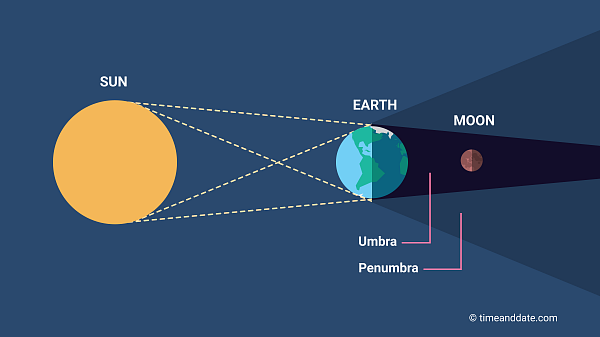
A lunar eclipse happens when the Earth passes between the Sun and the Moon, casting its shadow on the Moon.
- If the Moon is completely blocked, sudden darkness occurs for a few minutes to several hours before light returns.
- If the Moon is partially blocked, only a portion of its light dims.
- A lunar eclipse only occurs at night.
Solar Eclipse (Eclipse of the Sun)
A solar eclipse occurs when the Moon passes between the Earth and the Sun, blocking sunlight from reaching certain parts of the Earth's surface.
- Since the Moon is smaller than the Earth, its shadow covers only a portion of the Earth's surface.
- The areas experiencing the full shadow of the Moon undergo a total eclipse, known as the umbra.
- The regions covered by the partial shadow of the Moon experience a partial eclipse, known as the penumbra.
- As a result, different parts of the world may experience a total solar eclipse, a partial solar eclipse, or no eclipse at all at a given time.
- With advancements in science and technology, we can now predict solar eclipses and even watch them on television.

Seasons of the Year
Seasons of the year are specific periods characterized by distinct weather conditions. The four main seasons are:
- Autumn – Cold, windy, and rainy.
- Winter – The coldest season, with shorter days, longer nights, and rain or snow.
- Spring – Warmer weather with longer days than in winter.
- Summer – The hottest season, which may bring heavy rains in some areas and dry conditions in others.

Seasons of the year in the northern hemisphere
Causes of Seasons
The Earth's inclination (tilt) and revolution around the Sun cause seasonal changes.
- Regions close to the poles experience long periods of sunlight during summer and darkness during winter.
- Areas near the equator experience nearly equal lengths of sunlight and darkness throughout the year.
- In equatorial regions, the differences between seasons are less noticeable, and instead of four distinct seasons, there are typically two main seasons:
- Dry season
- Rainy (wet) season
Mwalimu
Unasoma somo hili? Niulize nikuelezee chochote kilichomo.
Ingia ili kumuuliza Mwalimu wa AI wa Sonza kuhusu mada hii.
Ingia ili kuulizaMajadiliano
Hakuna maswali bado